Mount Etna Erupting at Night (Aquatint)
Free Speech and Science Matter
Every time we start writing our newsletter, the world resembles even more of a movie set. Re-watching 2005's Star Wars: Episode III - Revenge of the Sith recently, the lightsaber duel amid volcanic lava eruptions seemed to mirror 2025, a year when truth seemed stranger than fiction, to borrow a phrase from Lord Byron (no stranger to torment). Midway through the second Roaring '20s, there seems no end to Earth's febrile state. It gets hot in an echo chamber. With anger-inducing online content everywhere, no wonder the Oxford Dictionary chose 'rage bait' its word of the year.
Yet, even if we can’t put out every fire, we remain positive we can do our bit to lift the cloche on confines built by fear, social media and personality politics. In October, Jane Fonda relaunched the Committee For The First Amendment, the free speech group her father, Henry, founded during the McCarthy era. Celebrities leant in - Natalie Portman, Whoopi Goldberg, Julianne Moore, Angelica Huston, Spike Lee to name a few. But celebrities aside, we hope that science, scientists, and the scientific process continue to be trusted by the public, despite the doubts being cast. Which means there’s work to be done...


Free Speech: Henry Ford's Committee For The First Amendment, founded in 1947, is revived by his daughter over 75 years later in 2025
Fortunately, communication without the firebrand approach seems to be trending, with new social media platforms like Blue Sky and Threads offering respite from X-rated expulsions. In an era when Elon Musk can declare, “We’ve got civilizational, suicidal empathy going on.” a book reviewed in the FT caught our eye. ‘Soft’ by Ferdinand Mount describes 3 eras of sentimentality since the Middle Ages. It defends sentimentality as a powerful force for good, citing Uncle Tom's Cabin for helping to end slavery, and Dickens novels fostering empathy for the poor. After a devastating year of global conflict, here's to soft power winning over hard. Watching The Royal Household roll out the red carpet for Trump's visit may not have been 'sentimental', but it hinted at what soft power can do. Assuming 'Soft' isn't a hardback, we’ll dive in for more about how 'sentiment' is moving us to be a more human society.
2025: When 'Ocean' Ruled the Waves

After living for nearly a hundred years on this planet, I now understand that the most important place on Earth is not on land, but at sea".
Sir David Attenborough on 'Ocean'
Speaking of diving, we remain ‘cynically positive’ about September's ratification of The High Seas Treaty which will afford more protection for ocean life - a welcome tonic to dampen the flames midway through the United Nations 'Oceans Decade'. In early 2025, Sir David Attenborough celebrated his 99th birthday and launched his documentary, 'Ocean'. We urge you to watch it. Everyone should witness the destruction inflicted by bottom trawling vessels which facilitate obscene levels of wasted life, given that most seafood caught is thrown back, dead and unwanted.
In a film translated into 13 languages, the man’s sage-like observations hit us in sharp focus as someone who has witnessed almost a century of planetary change. Despite our species’ appetite for destruction, Sir David is living proof that it is communicators with profound connections to Nature who win hearts and minds. From a PR perspective, his apolitical stance has enabled the greatest possible audience. Yet, sometimes it can take an injection of shock – even better, when sprinkled with humour - to bottom-out the message... So kudos to Blue Marine Foundation for making 'Extras', the 2-minute film featuring Sir Stephen Fry and Theo James (Gentlemen) - a perfectly-served catch of the day timed for World Oceans Day 2025
'Extras' by Blue Marine Foundation: 2 minute film exposes bottom trawling, with silver service help from actors, Sir Stephen Fry & Theo James
Poros is Saved!
Our team is extremely proud to be playing a part in supporting healthy oceans on behalf of people and animals that rely on thriving seas for livelihoods, oxygen, food and habitats. Once again, we asked members of the world’s media to shine a light on the many problems of industrialised fish farming. Well, they did us proud. On behalf of the Rauch Foundation and its partners, we gained a global audience in the hundreds of millions around World Oceans Day in June. Then, in August, we had one of the best phone calls we’ve ever received. After years of collaborative campaigning to save the idyllic Greek island of Poros from fish farm takeover, it was safe at last! As reported in Le Monde, Greece’s Environment Ministry said ‘no’ (όχι) to plans by an international firm to take over ¼ of Poros's landmass and coastline for industrial scale sea bass and sea bream farming, largely for export to France and Spain. This illogical, undemocratic, damaging plan for a tranquil island reliant on tourism for 80% of its income had been refused. The independent scientific and economic evidence presented by the Foundation, which we helped issued around the world, had worked. If you read our social media posts, you'd have seen our joy. Yet, sadly, similar threats remain all around the world, and we continue to convey them through various communications strategies and tactics.

Net Loss: We gain global media attention on the multiple risks posed by industrial fish farming,
Lungs of the Mediterranean
Not long before, the United Nations Oceans Conference (UNOC) in Nice saw us help publicise Ocean Takeover, a report by nonprofit, Foodrise, revealing new evidence on how sea bass and sea bream farms in the Mediterranean are driving environmental destruction and food injustice. Our team helped gain TV coverage in the likes of TV 5 Monde and BBC News. Then, July saw our relentless team expose the extreme damage caused by industrial fish farm waste on ocean ecosystems, specifically, on precious seagrass, Posidonia Oceanica, dubbed 'The Lungs of the Med' for its ability to fix carbon 35 times more efficiently than tropical rainforest! Underwater photography and mapping around the fish farms of Poros by Emily Jones at University of Oxford revealed worse than expected, extreme, long-term damage to this key habitat - a spawning ground for fish and habitat for other species. We ensured preliminary findings were reported in trade press, Seafood Source, The Fish Site, with scientific publication expected in 2026. But it's not just environmental and economic damage which needs exposing...
Does Aquaculture Need a Sentience Shock?

As far back as the 1400s, Leonardo da Vinci chose to be vegetarian, and people with an ethical bent have always questioned what or 'who' we eat. With aquaculture being the world’s fastest-growing area of food production, major decisions are being made right now about the direction we take our hunt for ‘blue protein’, technologically, environmentally and ethically-speaking. Do we want (or need) battery hen-style production systems in water? Are there less harmful options which consider sentience as well as biology? Where is the regulation?
Consider the understandable global outcry when Spain announced plans to build farms for octopuses - one of the most intelligent species known to man. Legal experts call for a pre-emptive ban. But should we be farming carnivorous fish (e.g. salmon, bass, bream, trout) given they need huge quantities of smaller fish to be caught, made into fish meal and oil, and transported thousands of miles to the farms? Shouldn't we favour low impact species such as seaweed and bivalves which require no food inputs, and help cleanse sea water? See NewScientist article: ‘Are farmed oysters, mussels and clams the ultimate green foods?’

Infographic we created for Mathew Hayek, Associate Professor of Environmental Studies at New York University
Remarkably, 408 aquatic species are being considered for farming, despite an ‘iceberg sized paucity of evidence' about which are appropriate. To face this gap, does aquaculture need a sentience shock? This was the question posed to members of the world's media whom we invited to an aquaculture panel held at The Oxford School of Animal Ethics. Its 10th Annual Summer School saw journalists gather at Merton Hall to hear experts from Yale, NYU, Aquatic Life Centre and George Washington Law present legal and scientific evidence that aims to plug this gap. We were delighted to see media coverage result around the world such as Reporterre, TriplePundit and Food Navigator.
Industrial Fish Farming: Net loss

Prof Jennifer Jacquet, Environmental Science & Policy Expert at the University of Miami spoke to Lukwesa Burak on BBC World News for World Oceans Day
Likewise, we were thrilled to secure an interview for Professor Jennifer Jacquet who spoke live to BBC World News ahead of World Oceans Day. During the primetime slot, she discussed the upcoming EU Oceans Pact, warning viewers we must not repeat past mistakes when farming protein on land. In her words, "We need transformative changes now. That includes more marine protected areas and a rethink of aquaculture growth." Jennifer also raised grave concerns about carnivorous fish farming, noting that 20–33% of fish caught globally is ground into fishmeal to feed other animals - and it's caught mostly in the food-insecure Global South. She noted, "It's hugely wasteful, and scientists have called for an end to this practice for decades." Sadly, aquaculture was supposed to ease pressure on wild fish stocks, yet the stresses only rise thanks to the system's extractive nature. At great cost.
Our Health is Our Wealth


Health Diagnostics' Julie Evason at 10 Downing Street and the Department for Business & Trade
Speaking of costs, as the saying goes, 'Our health is our wealth.' So given the power of AI to combine data usefully, not to mention Quantum computing (of which, much more in 2026, we predict), why don't we invest more in preventing ill health? Public Health efforts are never a quick fix, they're complex, multi-stakeholder, hard (and time consuming) to measure. They need steely determination - passion - to make a difference. For someone facing deprivation or unemployment, prevention is a 'luxury'. Yet, the NHS has three policy priorities: Community provision; Prevention; Use of digital channels. On the digital front, well joined-up data allows health test markers (blood pressure, lipids, lung function etc) to be captured and presented in a way patients can understand, discuss, enabling support for smoking cessation, weight loss or other service. Continuing to measure their outcomes means public health efforts can be targeted to the most at-need, making for improved population health.

Sound simple? It's hard. It needs a flexible, adaptive approach: true willingness to facilitate change. As such, we were thrilled to support our client, Health Diagnostics, alongside its partner, Medway Public Health to apply and then becoming 'finalists' in the coveted Health Service Journal Partnership Awards 2026. Congrats to all involved and good luck! We witnessed your all-round dedication and collaboration!
Julie Evason founded Health Diagnostics as a long-term advocate of prevention through health tech. We helped secure this panel discussion for her to speak alongside experts from The King's Fund, Royal Society for Public Health and others working towards a healthier nation. Likewise, we supported with invitations to meet other business leaders at 10 Downing Street and The Department of Business & Trade, where she put forward questions and ideas on keeping small businesses healthy. With SMEs seen by Government as ‘the beating heart’ of the UK economy, we predict workplace health can only grow, given our ever more pressured resource base. For more, see this blog by HD.
Culture, Art and Entertainment

Speaking of a healthy economy, many forget that the Creative Industries are worth £124 billion to the UK economy - just under 1/2 the value of financial services. So it was good to see recent moves lowering barriers to migration for dancers, writers, photographers and musicians. The move followed concerns among creatives that artificial intelligence will replace jobs, not to mention 'ripping off human ideas'. The BBC interviewed singer-songwriter, Emily Portman, about the ‘fake album’ released to her unwitting fans - a fraudulent work of art which took worryingly long for streaming services to take down...
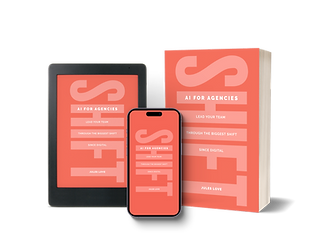
On the positive side, AI provides tools that free up creative agencies to focus on what they’re most skilled at: human-based strategising to support clients towards their goals. That’s the premise of a new book by the former commercial photographer, Jules Love. Shift – AI for Agencies is a practical guide for agencies. Hannah Kapff met Jules, a true polymath, while speaking on an AI panel early this year, which led us to have training from Spark AI, and to publicise the guide. We were thrilled when it rocketed to the No.1 spot in Amazon's advertising & marketing categories! Likewise, to secure reviews and talks for Business Insider and Design Week. In Jules’s view, 3 types of agency are emerging
1. Those using AI to pump out vast volumes of content
2. Agencies innovating new experiences with AI
3. Craft defenders making provably-human creative work


"When you’re working with creative AI tools, I'd say there's still a lot of craft. It’s a different kind of flow. But when I work with AI image generators and create AI workflows, it’s hugely absorbing, hugely interesting, and just like true creativity, at times very frustrating."
Jules Love, Author, 'Spark - AI For Agencies'


Petticoat Lane Market x The Workroom: Time to shop OnLane, not online!
One thing is for sure, we witness the truly human-centric, tactile craft when we get to publicise projects by The Workroom, our branding agency partner. (Given its 35 year track record, it has seen trends come and go.) Indeed, craft loomed large in working to create a first ever brand for Petticoat Lane Market - likely London’s oldest market, sited in the East End, which dates back to c.1650. The images above show real 'craft in action': public workshops held at the market for visitors of all age and ethnicity to get hands-on, making bags or collages. We loved being surrounded by the sights and smells of delicious street food whilst filming 'vox pops' - public opinions on the results of this impressive, multi-stakeholder work. We get a big kick when publicising such well-conceived, sensitively tackled, multi-stakeholder work. The project saw Workroom's liaise for several years with City Of London and Tower Hamlets councils, as well as Aldgate Connect BID. So we were thrilled to launch it to see key media publications, and see coverage in Design Week, Creative Boom and International Business Times.


David Grant + Brigid McMullen, Founder of The Workroom hit Broadcasting House for The Listed Londoner on BBC Radio London - Audience: 430,000 pmh
The campaign led to an invitation for Workroom founder, Brigid McMullen, to be interviewed live about the aspects of London she loves (and loathes) on prestigious show, BBC Radio London's Listed Londoner to spend an exhilarating 37 minutes LIVE to discuss memories: Dressing up as Ginger Spice for a party aboard a Routemaster bus, bagels on Brick Lane, and Nina Simone singing at Ronnie Scott's in 1984.
Brigid has a ‘no-bull’ approach to branding and an expert eye on the future of brands and branding which help us secure commentary in the likes of key title, Creative Boom. Reporter, Abbey Bamford, reported on the buzzwords creatives are ditching such as ‘synergy’ and ‘disruptor’, but Brigid McMullen threw "strategy" into the same bin, claiming people use the word without specifying which type of strategy - business, creative, digital? She urged that, "We should be more pedantic about what sort of strategy we mean, to clarify and communicate effectively." As our hero and the author of Alice In Wonderland, Lewis Carroll, said: 'You should say what you mean, and mean what you say!' The word 'plan' would be far more effective." (Like curious Alice, we rather agree.)
"This word 'Strategy' is literally useless until and unless we use it accurately. We should be more pedantic about what sort of strategy we mean to clarify and communicate effectively. The word 'plan' would be far more effective."
Brigid McMullen, Founder & MD, The Workroom
Fast Dragons, Slow Horses
Speaking of craft, our work for high-flying Helicopter Film Services (HFS) continues. We were thrilled to collaborate with Christian Manz, Framestore’s creative director of film, to convey to the media how human creativity was combined with cutting edge aerial filming technology to create soaringly stunning sequences for 'How To Train Your Dragon' - this summer’s VFX-fuelled live action production from DreamWorks and Universal Pictures. Its soaring trailer tells it all...
Helicopter Film Services with Framestore. The latest tech lets imagination fly.
Manz spoke about working with our client, the world-renowned aerial cinematographer, Jeremy Braben, Assoc. BSC, who founded HFS over 30 years ago. Our media case study conveyed in sensitive detail how the skills of operators working at the top of their game were brought together to generate breath-taking sequences for the big and smaller screen. Manz described the mission above.
For detail, see resulting articles in Definition, British Cinematographer or why not ask a question on LinkedIn. From fast dragons to Slow Horses, we also ensured HFS’s work on this near-cult-like Apple TV production was featured in key trade press. Our team can’t get enough of being grossed-out by Sir Gary Oldman’s character, Jackson Lamb, whose sardonic putdowns and trench coat slobbery are surely unrivalled in modern TV history! Read more in British Cinematographer.
"Ultimately, we wanted people in the cinema to feel like we’d felt when zooming along in a heli - you’re in a tight canyon, then the world opens up, and everything is stretched below you. We wanted to create that visceral feeling in the stomach again, in our Dragon flying shots. So that was Jeremy’s brief.”
Christian Manz, Creative Director of Film, Framestore
Gone But Not Forgotten
Once again, we were honoured to work with one of the late Queen’s favourite charities, the Women’s Royal Army Corps, to capture and convey memories of the only servicewomen alive who still recalled VE Day 75 years ago, 107 year old Joan Harris. Joan was able to tell her story of what happened after the release from WW2. We offered this as an exclusive to the Daily Mail - see Mail Online. Her story was sensitively recorded at her bedside, and excerpts broadcast by BBC News South West and BBC Radio Cornwall. Memories of the auspicious date seem all the more resonant, given current battles for land and resources, let alone the fight for freedom of speech and creativity. When Sir Winston Churchill was asked to cut arts funding to favour the war effort, he responded with a rhetorical question, “Then what would we be fighting for?“
"Everything was still. Then, all of a sudden, he came running down the concrete path to the ambulance and said, 'Brownie! The war is over!'"
107 year old WW2 veteran, Joan Harris, WRACA member
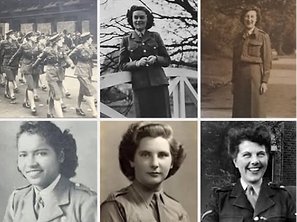

Paula Rogers CEO, WRACA, congratulates 107 year old Joan Harris
2025 in Pictures and People

Fitzrovia Xmas: Hannah, El, Olivia

Merton Hall, Oxford: Hannah, Maddy

F&M Birthday: Maddy, Minnie

London EC1: Maddy, Hannah, Olivia Cox

Khruangbin Gig

Michael Carig-Martin at The Royal Academy
We'd like to extend a huge thank you to our illustrious clients who work so hard on their respective missions. It is a privilege to convey your stories and your passion. Likewise, to our team for going above and beyond the call of duty. We're thrilled to welcome Eleanor Crawford who joined us armed with a degree in Philosophy from the University of Cambridge. We also welcome Olivia See who has a degree in Social Anthropology & International Studies from the University of Manchester. Both have lived overseas or travelled extensively. Maddy flew Curious Towers for the consumer PR world, but we're happy she's still on for Curious cocktails.
Special thanks also to our interns, Emily Jones, Amelia Mowat, Minnie Watson, and work experience student, Skye Fearnon, who wrote an excellent ‘Fast Fashion’ blog, having dug into the subject whilst here.
Likewise, to our partners - the people and organisations who make our work so worthwhile and interesting. We're humbled to learn from you. And finally, to the journalists, producers and editors we work with. Your job is far from easy. A MEGA thanks for reading - and staying Curious.